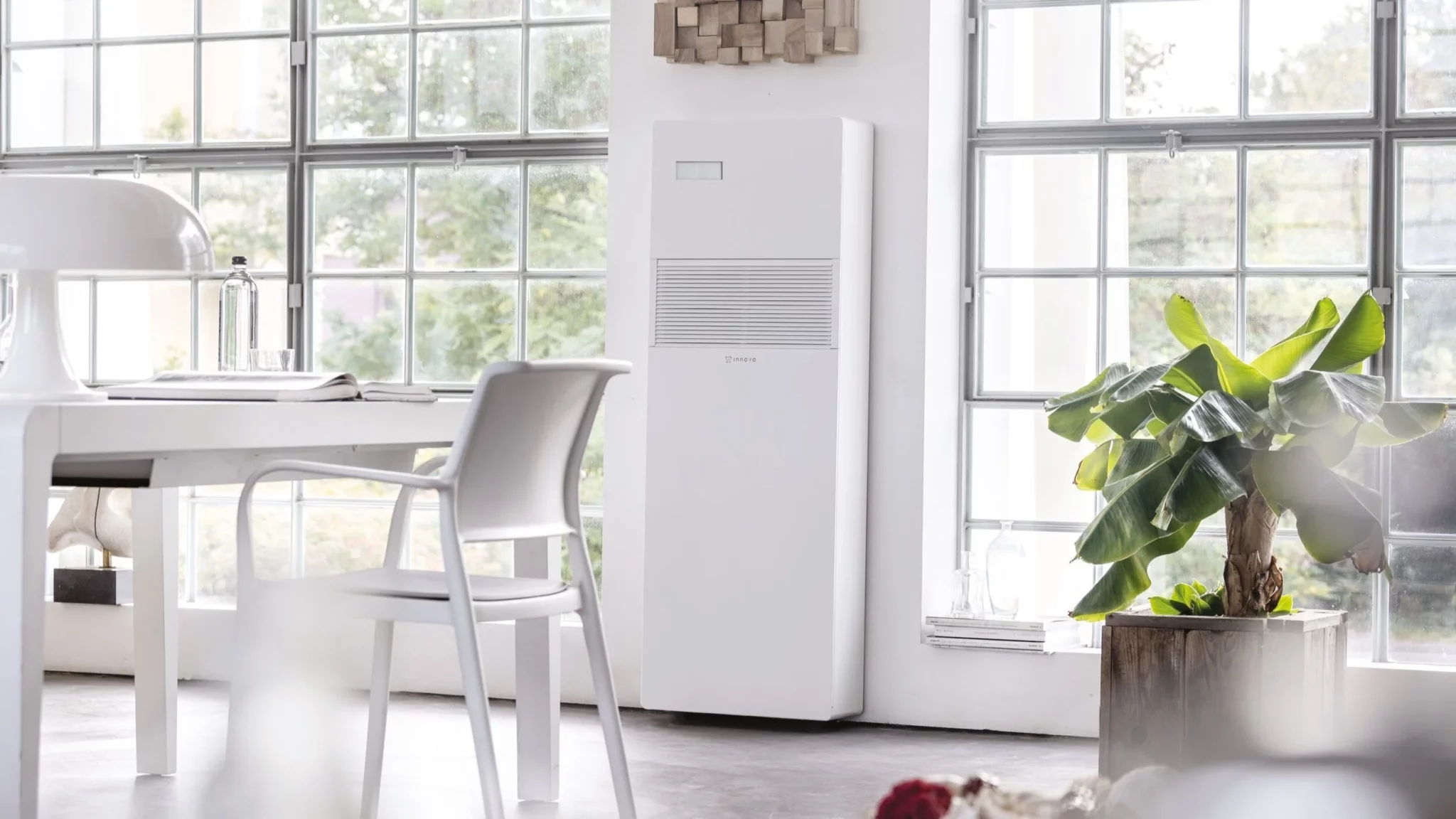
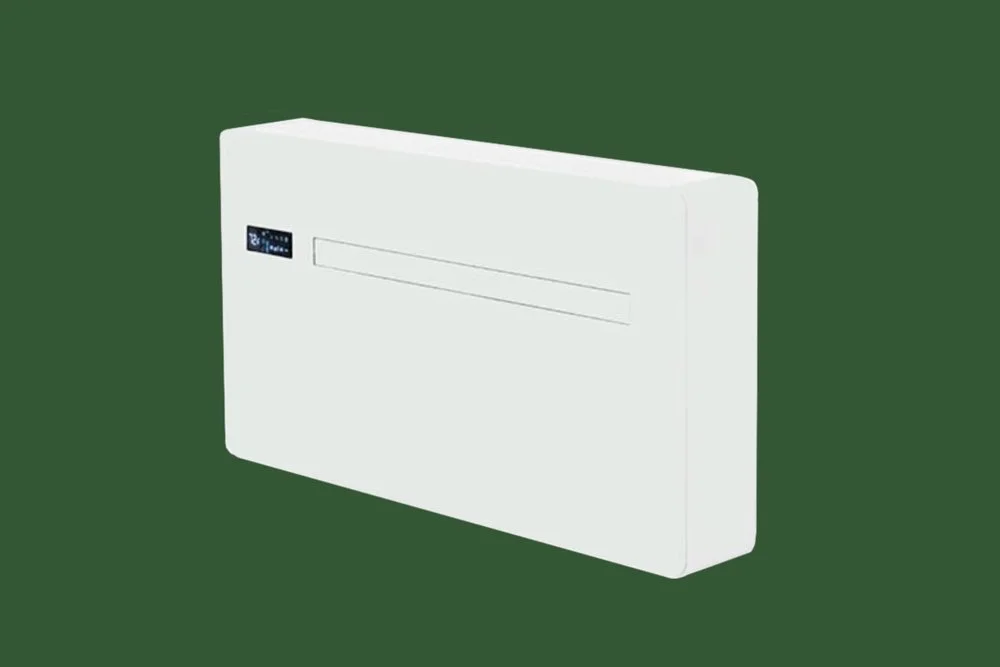
Innova’s AIO NextGen PTHP: The Modern Replacement for Outdated PTACs

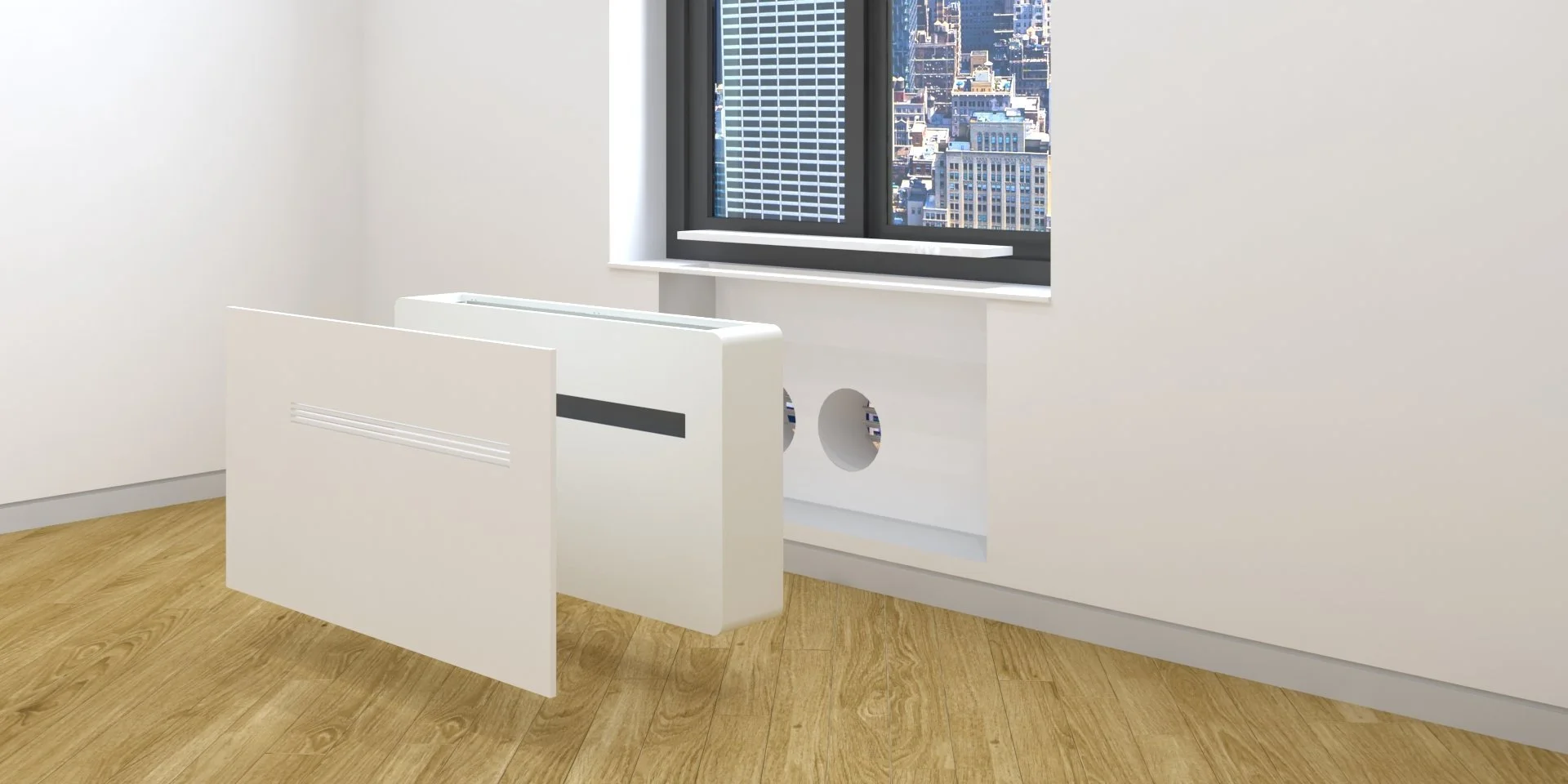
The Innova AIO NextGen PTHP is built to replace old, inefficient packaged terminal air conditioners (PTACs). It slides into the existing standard PTAC wall sleeve, so there is no custom sleeve to fabricate and no new wall opening to cut. Unlike a split heat pump, it needs no outdoor unit: everything is contained in one indoor cabinet. It is also Innova’s most powerful through-the-wall heat pump, delivering up to 17,000 BTU per hour of cooling and 15,500 BTU per hour of heating.
For property owners, that makes the NextGen PTHP (packaged terminal heat pump) one of the simplest ways to move a building from noisy, energy-hungry PTACs to high-efficiency, cold-climate heat pump heating and cooling, one room at a time. The unit runs as quietly as 27 decibels and keeps heating down to -5°F. It is also an Innovation Award recipient at the 2024 AHR Expo.
Built for Every Property Type
The NextGen PTHP adapts to the needs of each property, providing comfort, efficiency and reliability across building types.
Hotels: Quiet operation supports restful guest stays, without the disruptive compressor noise of legacy PTAC units.
Multifamily buildings: Owners give tenants consistent comfort while lowering energy and maintenance costs, with high-efficiency operation and self-cleaning coils that reduce service calls.
Healthcare facilities: MERV 13 filtration and a fresh-air energy recovery ventilator (ERV) with self-cleaning coils support excellent indoor air quality, with minimal disturbance to patients.
Senior living: Facilities can improve indoor air quality, lower energy costs and keep rooms quiet, all critical to resident comfort and well-being.
Key Features
• Up to 17,000 BTU per hour cooling and 15,500 BTU per hour heating
• Cold climate heat pump, heating down to -5°F
• Twin-rotary BLDC inverter compressor (brushless direct current)
• Integrated ERV, supplying up to 50 cubic feet per minute of fresh air
• Programmable outside-air intake
• MERV 13 filters, with accessible outside-air filters
• Quiet operation, as low as 27 decibels
• ThermaSleeve insulation
• Self-cleaning coils
• Condensate disbursement system, with no drain line required
• Durable, all-metal, paintable case
• Fits any standard PTAC sleeve, with no custom sleeve required
• Backward-blade centrifugal condenser fan with an electronically commutated motor
NextGen PTHP Compared to a Traditional PTAC
| Feature | AIO NextGen PTHP | Traditional PTAC |
|---|---|---|
| Heating | Inverter heat pump that keeps heating down to -5°F | Usually electric resistance heat, the costliest way to heat with electricity |
| Proven Efficiency | Used 75% less power than a competing cold-climate PTHP in an independent winter field test | Older, single-speed units cycle on and off at full power |
| Built-in ERV | Yes, fresh air with energy recovery | No conditioning of outdoor air |
| Indoor Air Quality | MERV 13 filtration, plus ERV for continuous fresh air | Basic filtration, with no dedicated fresh air |
| Sound | As low as 27 decibels, whisper-quiet | Loud compressor cycling |
| Space | Compatible with any standard PTAC sleeve, with no custom sleeve required | Often requires custom sleeves and more complex retrofits |
| Design | Sleek, all-metal, paintable case | Bulky, utilitarian design |
| Condensate | No drain line required; a nebulizer pump sprays condensate outside | Requires a condensate drain line |
Why the NextGen PTHP Is the Clear Choice for PTAC Replacement
Replacing a worn-out PTAC with another PTAC locks a building into the same noise and energy waste for another decade or more. The NextGen PTHP uses the sleeve already in the wall, so the swap stays simple, while the building gains a quiet, cold-climate heat pump, filtered fresh air and lower operating costs.
Ready to see how the NextGen PTHP can improve your property’s comfort and efficiency? Book time with Gigawatt to discuss whether it is the right fit for your building, or visit our showroom at Yonge and Eglinton in Toronto to see it in person.